Customer service
Blog

Does your dog scratch himself frequently and does his coat develop bald patches? It is quite possible that your dog is suffering from a hotspot. Dog hotspots can be agonising for your pet because of the itching they cause and the inflammation of the skin that accompanies the pain. It is therefore advisable to proceed with prompt treatment if you find a hotspot in your dog.
What is a dog hotspot?
A hotspot in dogs (Pyotraumatic dermatitis) is a wet spot in the coat with a bright red skin covered with pus. Hotspot is a severely itchy moist eczema in dogs that can develop in a few hours by scratching or biting. Dogs become listless, often accompanied by fever. Appetite may also be lost.
Hotspots in dogs can be divided into two categories:
A superficial hotspot: itching on the surface. A bald and moist area often surrounded by a red border develops. The hair around the hotspot often sticks together. A deeper hotspot: A bacterial infection of the hair follicles. This hotspot is often subcutaneous, making it inaccessible to the dog, and is often not seen until the skin is exposed. A thickened skin and pus can then become visible. Such a hotspot can be very painful for a dog. Hot spots in dogs usually occur on the muzzle and thighs. Breeds of dogs with a thicker undercoat may be affected more readily.
The cause of hotspotting in dogs is itching. This includes hypersensitivity to ear mites, flea bites, tick bites and mange mite infections. After a flea bite, itchy bumps appear, after which the dog will scratch, lick and bite, and the skin becomes even more damaged, leading to even more itching. In short, a wet (pus) eczema spot develops under the hair, and the (inflamed) skin can become swollen and bright red. This is often accompanied by a fever.
Hotspotting is most common in the tail area, thighs, croup and hindquarters of the dog. Dogs with an ear mite infection with itching usually suffer from this condition under the ear and around the cheek area.
How to recognise a dog hotspot
In general, a hotspot in dogs is easy to recognise. There are bald patches in the coat which are accompanied by a reddish or firey colour and fluid (yellowish pus) comes out. However, it is more difficult to recognise a deeper hotspot. The following symptoms can occur with a hotspot. Superficial hotspot: a lot of scratching, biting on specific spots in the coat, bald and red spots in the coat, moist and purulent spots in the coat, fever, less appetite. Deeper hotspot: thickening in the coat, fever, skin feels warm, listless behaviour, expressions of pain.
Natural hot spot treatment
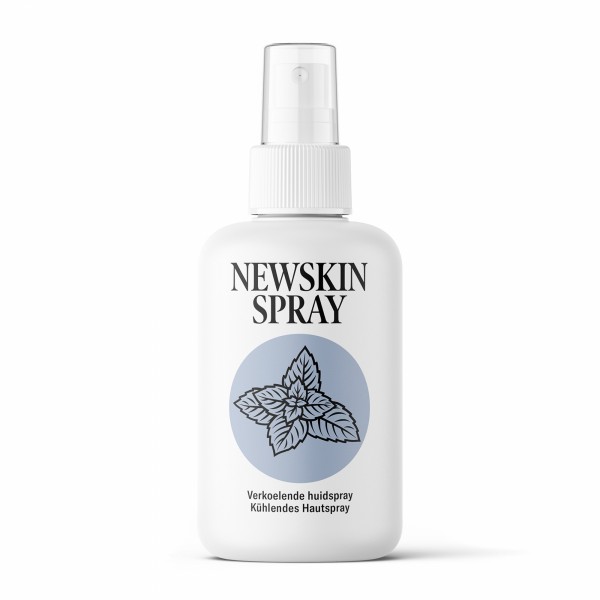
The dog's coat needs to be well groomed and combed to remove the undercoat which comes off naturally in hot, humid weather. In addition, a cooling skin spray with a natural supplement for skin and coat is recommended.